Finnish dill and meat stew, or Tilliliha, is a classic Nordic comfort dish made by slow-braising meat with root vegetables, whole spices, and fresh dill. Traditionally made with veal or beef, this hearty stew features a tangy-sweet dill sauce. It is perfect when served with mashed or boiled potatoes and steamed vegetables. Browning the meat first and simmering it in flavorful stock ensures tender, melt-in-your-mouth results that capture the essence of Finnish home cooking.
Finnish dill stew has always held a special place in my heart, and it deserves a place in yours, too. Finnish dill stew was one of the greatest treats of my childhood, especially when my mother made it. This traditional dish tends to split opinions, some absolutely love its tangy dill-forward flavor, while others are less enthusiastic. But in our home, it was a beloved classic. My mother’s version stands out from many traditional recipes because she always browned the meat first and simmered it until tender in a flavorful vegetable stock. The result was a rich, comforting stew with incredible depth. Although this particular recipe is made with pork shoulder, the method works beautifully with the more traditional veal or beef as well, yielding a wonderfully hearty and aromatic Finnish meal.
A Finnish Classic That Evokes Home and Tradition
Tilliliha is one of those dishes that instantly evokes the essence of Finnish home cooking. Simple ingredients are transformed into something warm, comforting, and deeply nostalgic. What I love about this stew is how it manages to be both rustic and refined. The combination of meat, root vegetables, whole spices, and plenty of dill creates a unique balance of flavors. It is mild yet bright, savory yet slightly sweet, and unmistakably Finnish.
In my family, the dish was always tied to weekends or special occasions. The process itself feels thoughtful and unhurried. It starts by browning the meat, then letting the broth gently simmer, and finishing the sauce with just the right amount of dill and vinegar. While many traditional versions of Tilliliha simmer the meat directly in water without the stock or browning, my mother insisted on searing it first. That one extra step adds a deeper savory note and a beautiful richness to the final sauce.
Finnish dill stew is very adaptable. Pork shoulder makes a delicious, budget-friendly version. For a more traditional result, use veal or beef, such as shank or neck, with the bone. Each type of meat adds its own character. Still, the heart of the dish is the fragrant dill sauce, which ties everything together.
How Dill Stew Evolved and Why This Version Works So Well
Although Dill and Meat stew – Tilliliha is firmly rooted in Finnish culinary heritage, every family seems to have its own interpretation. Some create a lighter, broth-like sauce, while others prefer a richer, creamier finish. Spices can vary as well, white pepper only or both white and black peppercorns. Some cooks simmer the meat for hours, letting time do the work. Others rely on more tender cuts for a quicker meal. This flexibility has allowed the dish to evolve naturally, adapting to changing tastes yet holding onto its comforting core.
My mother’s approach offers a beautiful balance of tradition and flavor. Browning the meat builds depth, while the vegetable stock keeps the overall profile clean and bright. When dill, vinegar, and sugar are added toward the end, the sauce transforms into the signature tangy-sweet flavor that defines Tilliliha. It’s comforting, old-fashioned, and wonderfully Finnish.
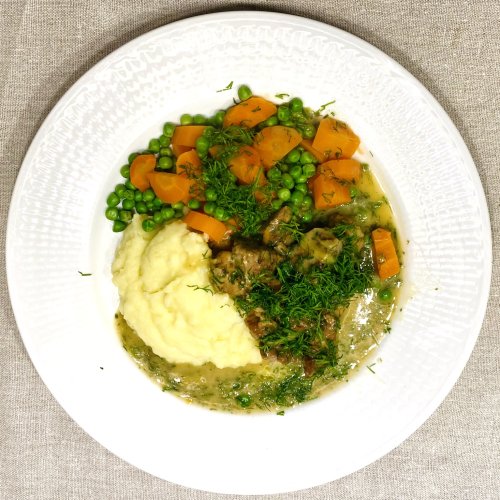
Even if dill stew sounds unusual to newcomers, the taste makes perfect sense once you try it. The dill softens the richness of the meat, the vinegar adds brightness, and the sugar balances the sharp edges. When served with mashed potatoes, boiled carrots, and peas, the meal becomes both wholesome and deeply soothing; it is Finnish comfort food at its best.
Whether you grew up eating Tilliliha or are discovering it for the first time, this version is a heartfelt introduction to a dish that continues to bring warmth and nostalgia to Finnish homes. And just like in my childhood kitchen, it might become one of your family’s most treasured dishes too.
For more traditional Finnish recipes, visit my Finnish recipe collection. These dishes are either family favorites passed down through generations or newly adopted recipes, and every one is thoroughly tested and ready to enjoy.
What to serve with Tilliliha
Finnish dill stew is traditionally served with simple sides that let the rich, herby flavor shine.
- Mashed potatoes
- Boiled potatoes, such as Finnish New Potatoes
- Pickled cucumbers (mummonkurkut) or vegetables
- Rye bread
More Finnish recipes you may enjoy
For more traditional Finnish recipes, you might also like these other dishes from my kitchen:
For a classic Nordic soup, try my Finnish Salmon Soup (Lohikeitto), a creamy and comforting staple in Finnish homes.
If you enjoy traditional oven-baked dishes, my Finnish Karelian Stew (Karjalanpaisti) is another slow-cooked classic that pairs beautifully with simple side dishes and rye bread.
For baking lovers, Finnish Archipelago Bread is a perfect accompaniment to hearty stews like this one.
You can explore all my Finnish recipes here:
👉 https://cookingwithella.com/category/finnish-recipes/
Share the Recipe
Traditional Finnish Dill Stew (Tilliliha)
Ingredients
- 1 kg pork neck or veal or beef
- salt and pepper to season the meat
- 10 whole white peppercorns
- 10 whole black peppercorns
- 2 bay leaves medium size
- 1 leek medium size
- 1 onion medium size
- 2 carrots
- 1 stalk celery
- 1 liter vegetable stock from cubes or homemade
- Water if the stock reduces too much
- 0.5 dl cream
- 4 tbsp butter
- 1 tbsp oil
- 2 tbsp all-purpose flour
- 4-5 tbsp spirit vinegar
- 1-1,5 tbsp sugar
- 1 tsp salt
- 6 dill stems
- 2,5 dl finely chopped dill + extra for garnish.
Instructions
Prepare the meat
- Bring the meat to room temperature. Cut into cubes and remove excess fat or membranes.
- Heat a frying pan and brown the meat in batches so it sears properly. Season with salt and black pepper. Transfer to an ovenproof pot or casserole dish.
Prepare the vegetables
- Wash the leek and celery. Peel and chop the onion and carrots. Cut the leek and celery into 2 cm pieces. Add all vegetables to the pot with the meat.
- Add the stock to the pot.
- Heat the pot and bring it to a boil. Skim off any foam to keep the broth clear.
- Season with the whole peppercorns, bay leaves, dill stems, and 2 tablespoons of spirit vinegar. Boil briefly.
Slow-cook the stew
- Cover with a lid and place in the oven.
- Cook for 2–2.5 hours, or until the meat is very tender and almost falling apart.
Make the dill sauce
- Remove the meat from the pot. Strain the cooking liquid and save it. Discard the vegetables and spices.
- In a saucepan, melt the butter and add the flour. Cook briefly without browning.
- Gradually whisk in the strained broth until smooth and gently simmer for 10 minutes.
- Add the remaining vinegar, sugar, and chopped dill. Adjust acidity and sweetness to taste.
- Add the cream.
Finish the stew
- Return the meat to the sauce and simmer for an additional 2 minutes.
- Season with more salt, pepper, or vinegar if needed.
Serving:
- Garnish with chopped dill.
- Serve with mashed or boiled potatoes, and vegetables, pickled beets, and a simple salad.
Notes
- Tilliliha is traditionally made with veal or beef, though pork is also commonly used in modern home cooking.
- The cooking time varies depending on the protein: veal may become tender slightly faster, while beef may require longer simmering.
- Regardless of the meat you choose, the stew is done when the pieces are soft, tender, and almost falling apart.